Tennis is a sport that thrives on variety, and one of the most significant factors contributing to its diversity is the type of court surface. The choice of court surface impacts not only the speed and bounce of the ball but also the strategies employed by players. In this article, we will explore the four main types of tennis court surfaces—grass, clay, hard, and indoor—analyzing how each one affects gameplay and player performance.
Grass courts are the oldest type of tennis surfaces and are most famously associated with Wimbledon, the sport’s most prestigious tournament. The grass surface offers a unique playing experience characterized by its fast pace and low bounce. Players who excel on grass often possess strong serve-and-volley skills, allowing them to take advantage of the quick points and unpredictable bounces that grass can produce. The surface can be challenging, requiring players to adapt their strategies to account for its slipperiness, particularly early in the tournament when the grass is fresh. Notable champions like Roger Federer and Pete Sampras have thrived on this surface, showcasing their remarkable agility and quick reflexes.
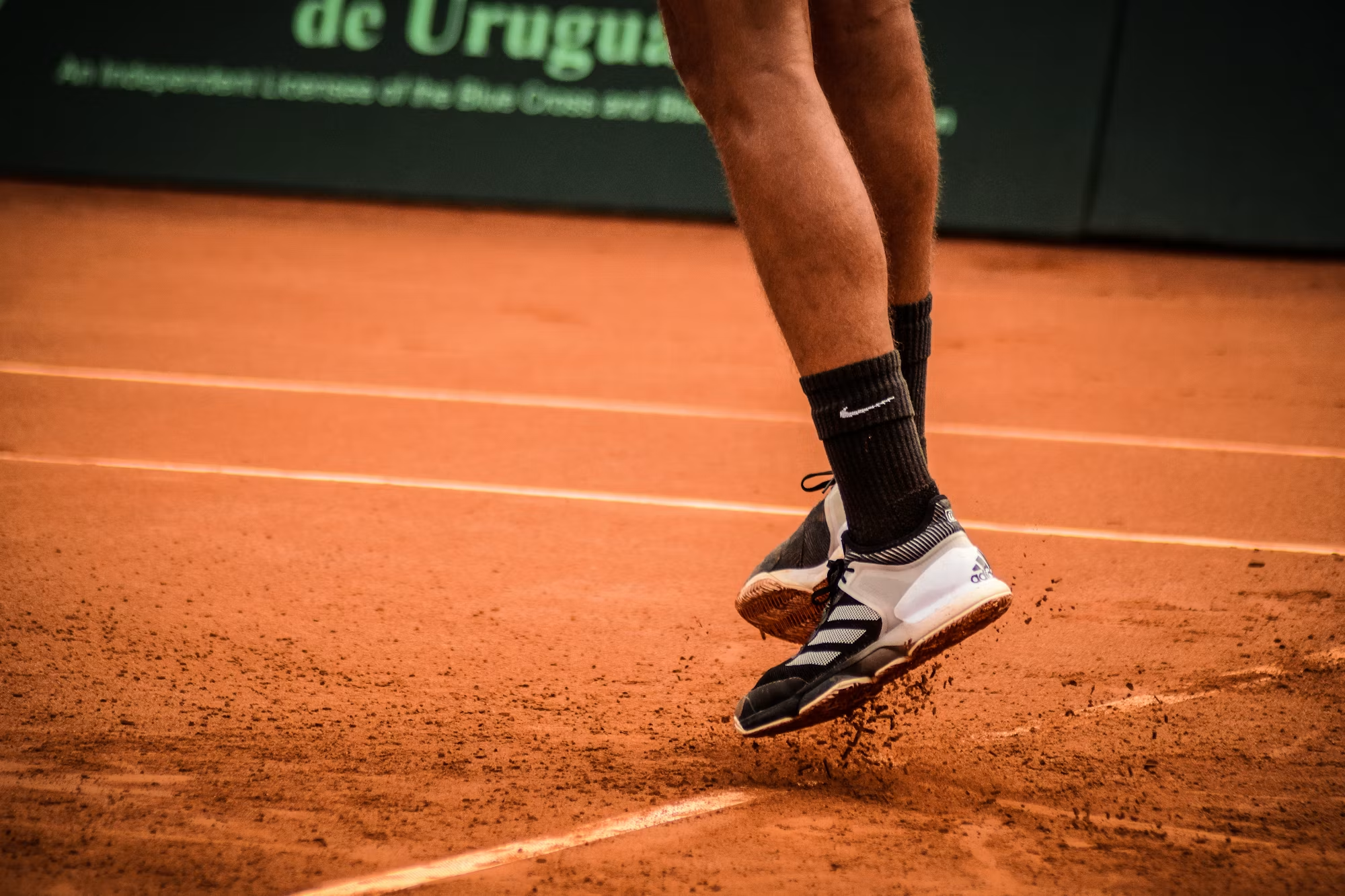
In contrast, clay courts, most famously represented by the French Open, provide a starkly different playing environment. The clay surface is known for its slower pace and higher bounce, rewarding players who possess excellent endurance and tactical acumen. Clay courts allow for longer rallies, giving players more time to construct points and exploit their opponents’ weaknesses. The surface favors baseline players who can slide into their shots, a skill that is essential for maintaining balance and control on clay. Rafael Nadal, often dubbed the “King of Clay,” has dominated this surface, demonstrating his remarkable ability to generate topspin and wear down opponents over extended matches. The strategic nature of clay court play often requires players to be patient and methodical, making it a true test of mental fortitude and physical stamina.
Hard courts, commonly used in tournaments like the US Open and the Australian Open, strike a balance between the characteristics of grass and clay. This versatile surface is typically made from asphalt or concrete, offering a medium pace and a consistent bounce. Hard courts allow for a wide range of playing styles, making them a popular choice for both recreational and professional play. Players like Serena Williams and Novak Djokovic have found great success on hard courts, utilizing their powerful serves and aggressive baseline play. The adaptability of hard courts also means that players must be well-rounded in their skills, blending speed, strategy, and shot variety to excel.
Indoor courts are another category that deserves attention, often featuring either hard or carpet surfaces. Indoor tennis eliminates external factors like wind and rain, allowing for controlled playing conditions. This can significantly affect the dynamics of a match, as players can rely on their serve and shot placement without worrying about the elements. Indoor tournaments, like the ATP Finals, often feature fast-paced matches that emphasize aggressive play and quick reactions. The ability to adapt to the indoor environment can give players an edge, particularly those who thrive in fast conditions. However, the lack of natural light can also present challenges for players who rely on visual cues from their surroundings.
Each type of court surface plays a crucial role in shaping a player’s experience and success on the tennis circuit. Players often develop specialized skills tailored to their preferred surfaces, leading to unique strengths and weaknesses. For example, a player who excels on grass may struggle on clay, where the slower pace and longer rallies demand different tactics and physical attributes. Understanding these nuances is vital for both players and fans, as it adds depth to the appreciation of the game.
The influence of court surfaces extends beyond individual performance to impact tournament organization and scheduling. Events like the Grand Slams must consider the characteristics of each surface when determining match formats and player schedules. For instance, matches on clay typically take longer than those on grass or hard courts, requiring careful planning to accommodate all participants. This consideration is essential for maintaining the integrity of the tournament and ensuring a fair competition.
Moreover, the evolving technology and maintenance of court surfaces play a significant role in modern tennis. Advances in synthetic materials and surface treatment have improved durability and consistency, enhancing the overall playing experience. Organizations continually invest in research and development to create surfaces that better suit the needs of players while also catering to fan engagement and viewing experiences.
In recent years, there has also been a growing emphasis on sustainability in tennis court construction and maintenance. With increased awareness of environmental issues, many facilities are exploring eco-friendly materials and practices to reduce their carbon footprint. Initiatives such as water conservation during court upkeep and the use of recycled materials for court construction are becoming more common, demonstrating a commitment to both the sport and the planet.
In conclusion, the different types of tennis court surfaces play a fundamental role in shaping the sport. Each surface presents unique challenges and opportunities, influencing player performance and strategies. From the fast-paced grass courts of Wimbledon to the enduring clay of Roland Garros, each environment contributes to the rich tapestry of tennis history. As players continue to evolve and adapt to their chosen surfaces, the appreciation for these foundational elements of the game will only deepen, enriching the experience for players and fans alike.