Basketball is a game that combines athleticism, skill, strategy, and teamwork. For players at every level, mastering the essential skills and techniques is critical to success. Whether you’re a beginner just starting or an experienced player aiming to refine your abilities, understanding the fundamental components of the game is crucial. In this article, we’ll break down the key skills and techniques needed to excel in basketball, covering everything from shooting and dribbling to passing, defense, and more.
Shooting: The Foundation of Scoring
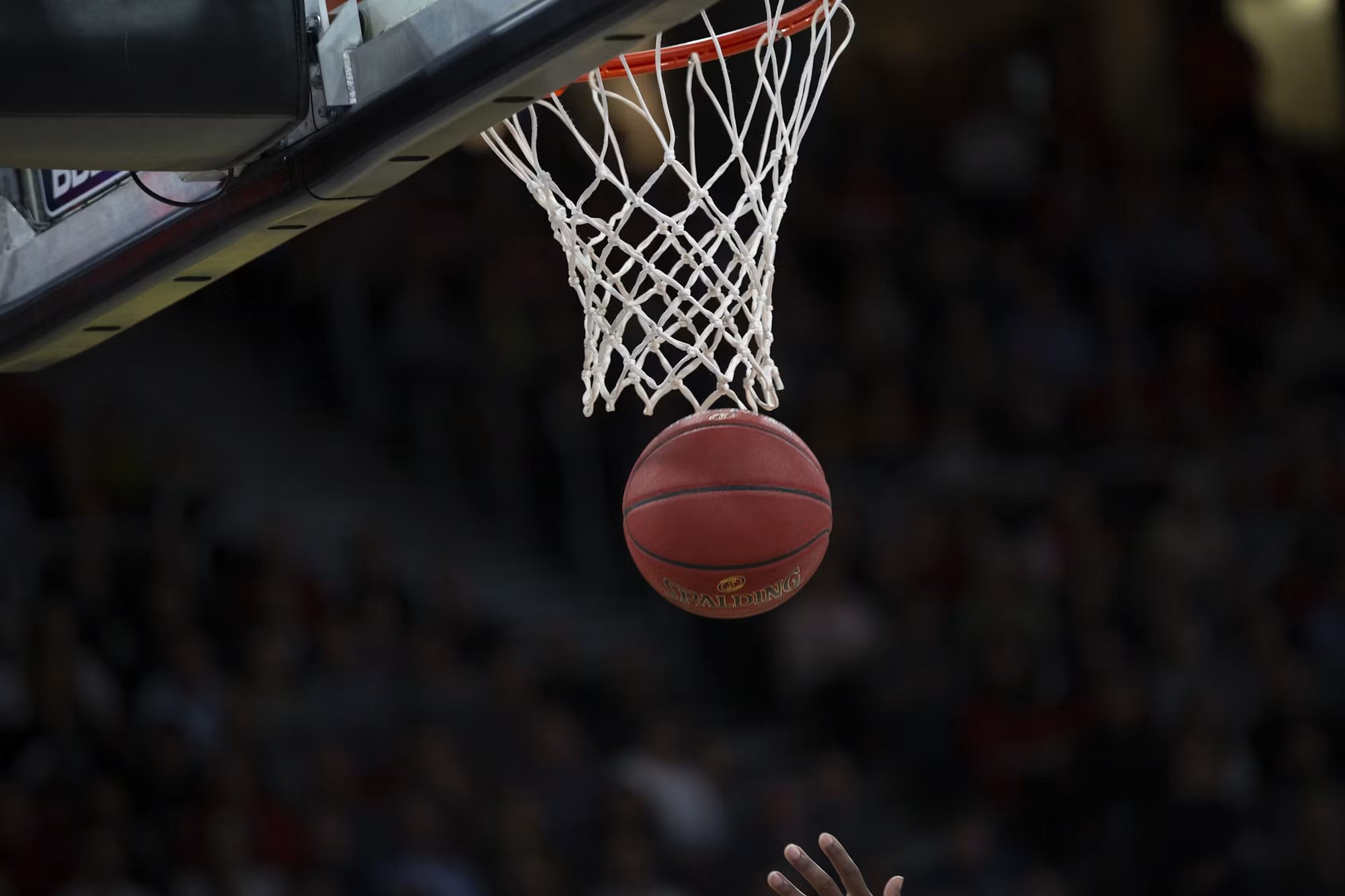
One of the most important aspects of basketball is shooting. A team that cannot score will struggle to win games, making shooting a skill that every player must master. There are several types of shots in basketball, each requiring different techniques and strategies.
The Jump Shot
The jump shot is the most common form of shooting in basketball. It involves a player jumping and releasing the ball in mid-air, allowing them to avoid defenders while maintaining accuracy. To execute a proper jump shot, players should focus on several key elements:
– Stance and Balance: A solid stance is essential for consistency. The feet should be shoulder-width apart, and the knees slightly bent to allow for an explosive upward motion.
– Shooting Hand and Form: The shooting hand should be placed under the ball with the elbow bent at about 90 degrees. The non-shooting hand is used for guidance, but it should not push the ball. The release of the ball should be smooth, with a flick of the wrist for added backspin.
– Follow-Through: The follow-through is crucial for ensuring the ball goes in the right direction. After releasing the ball, the shooting hand should remain extended with the fingers pointed at the basket, like reaching into a cookie jar.
The Layup
While the jump shot is essential, the layup is a crucial skill that allows players to score in close-range situations. Layups are typically performed when a player drives to the basket and attempts to softly place the ball into the hoop.
– Approach and Footwork: The key to a successful layup is proper footwork. When driving to the basket, a player should take a strong step with their outside foot, then jump off their inside foot for balance and power.
– Use of the Backboard: For layups, especially when approaching from the side, players should aim for the top corner of the backboard, which offers a higher probability of making the basket.
– Finishing with Control: A successful layup requires a soft, controlled release of the ball, with the focus on placing it gently into the basket.
Free Throws
Free throws are awarded after certain fouls and provide an opportunity to score without opposition. These shots are taken from a set position on the free-throw line, making them a test of a player’s mental focus and consistency.
– Form and Routine: Successful free throws are often the result of repetition and muscle memory. A consistent shooting form and routine, including a set number of dribbles or a deep breath before the shot, can help players maintain focus under pressure.
– Mental Focus: Free throws often come at critical moments in the game. Staying calm and blocking out distractions is key to converting these shots into points.
Dribbling: The Art of Ball Control
Dribbling is the skill that allows players to move with the ball while maintaining control. Effective dribbling is essential for creating scoring opportunities, advancing the ball, and breaking down the defense.
Basic Dribbling
Mastering basic dribbling is the first step in becoming an effective ball handler. Players should focus on keeping the ball low and using their fingertips, not their palms, for better control.
– Dribbling with Both Hands: Developing the ability to dribble with both hands is vital for versatility on the court. Being able to switch hands while maintaining control allows players to navigate past defenders more easily.
– Protecting the Ball: Dribbling is not just about moving the ball; it’s also about protecting it from defenders. Players should use their body to shield the ball, keeping it away from defenders who might try to steal it.
Advanced Dribbling Moves
As players progress, they should learn advanced dribbling techniques that can help them break down defenses and create scoring opportunities.
– Crossover Dribble: The crossover involves quickly switching the ball from one hand to the other, confusing the defender and creating space to drive to the basket.
– Behind-the-Back and Spin Moves: These moves can be effective in evading defenders and creating separation. The key is to change directions quickly and keep the ball low to the ground.
– Pull-Up Dribble: The pull-up is a quick stop and shot move that combines dribbling with shooting. It’s a valuable skill for players who want to make a fast, decisive shot while moving.
Passing: The Key to Team Play
Basketball is a team sport, and passing is one of the fundamental skills that allow teams to work together effectively. A well-timed pass can break down a defense, create open shots, and keep the offense flowing.
Basic Passes
Every player must be proficient in the basic passes: the chest pass, bounce pass, and overhead pass.
– Chest Pass: The chest pass is the most basic and accurate form of passing. It involves holding the ball with both hands at chest level and pushing it to a teammate using a quick, sharp motion.
– Bounce Pass: The bounce pass is often used to pass around a defender. The ball bounces on the floor once before reaching the teammate, making it harder for defenders to intercept.
– Overhead Pass: The overhead pass is useful for passing over defenders. It requires both hands to hold the ball above the head, then using force to throw the ball to a teammate.
Advanced Passing
Advanced passing techniques help players make quicker and more creative decisions.
– No-Look Pass: A no-look pass is when a player looks away from the intended target before passing the ball. This can confuse defenders and make the pass more difficult to predict.
– Alley-Oop: The alley-oop is a high-flying pass typically thrown near the basket, where a teammate jumps to catch the ball mid-air and scores with a dunk or layup.
Defense: The Art of Stopping Your Opponent
A great offensive player can make a difference, but a great defender can change the course of a game. Defense is an integral part of basketball, and players must focus on positioning, anticipation, and discipline.
Individual Defense
Strong individual defense requires agility, anticipation, and the ability to read the opponent’s movements.
– Staying in Front of Your Man: The primary goal of individual defense is to stay between the offensive player and the basket. This requires lateral movement and quick reflexes.
– Defending without Fouling: A great defender must avoid committing fouls while contesting shots or attempting to steal the ball. Timing is key, as is the ability to anticipate the offensive player’s next move.
Team Defense
Basketball is a team sport, and defense is no different. Good defensive teams work together to stop the ball and force turnovers.
– Help Defense: Help defense occurs when a defender provides assistance to a teammate who is guarding a player with the ball. This requires good communication and awareness.
– Zone Defense: In a zone defense, each player guards a specific area of the court rather than an individual opponent. This strategy can be effective in limiting open shots and forcing the offensive team to take difficult shots.
Rebounding: Gaining Possession of the Ball
Rebounding is a crucial skill that can give teams extra opportunities to score or prevent the opposition from doing so. A player who excels at rebounding is often a difference-maker in a game.
– Positioning: The key to successful rebounding is positioning. Players must anticipate where the ball will land and get into position before the rebound occurs.
– Boxing Out: Boxing out is a technique used to block an opponent from getting to the ball. Players must use their body to create space between their opponent and the basket, increasing their chances of grabbing the rebound.
Conclusion
Basketball is a dynamic and exciting sport that requires a diverse set of skills and techniques to excel. From shooting and dribbling to passing, defense, and rebounding, players must develop a comprehensive skill set to perform well on the court. By focusing on these fundamental aspects of the game, players can improve their performance, become more effective teammates, and ultimately help their team succeed. Whether you’re just starting out or are aiming to refine your skills, mastering the core techniques of basketball is the first step toward becoming a better player.